

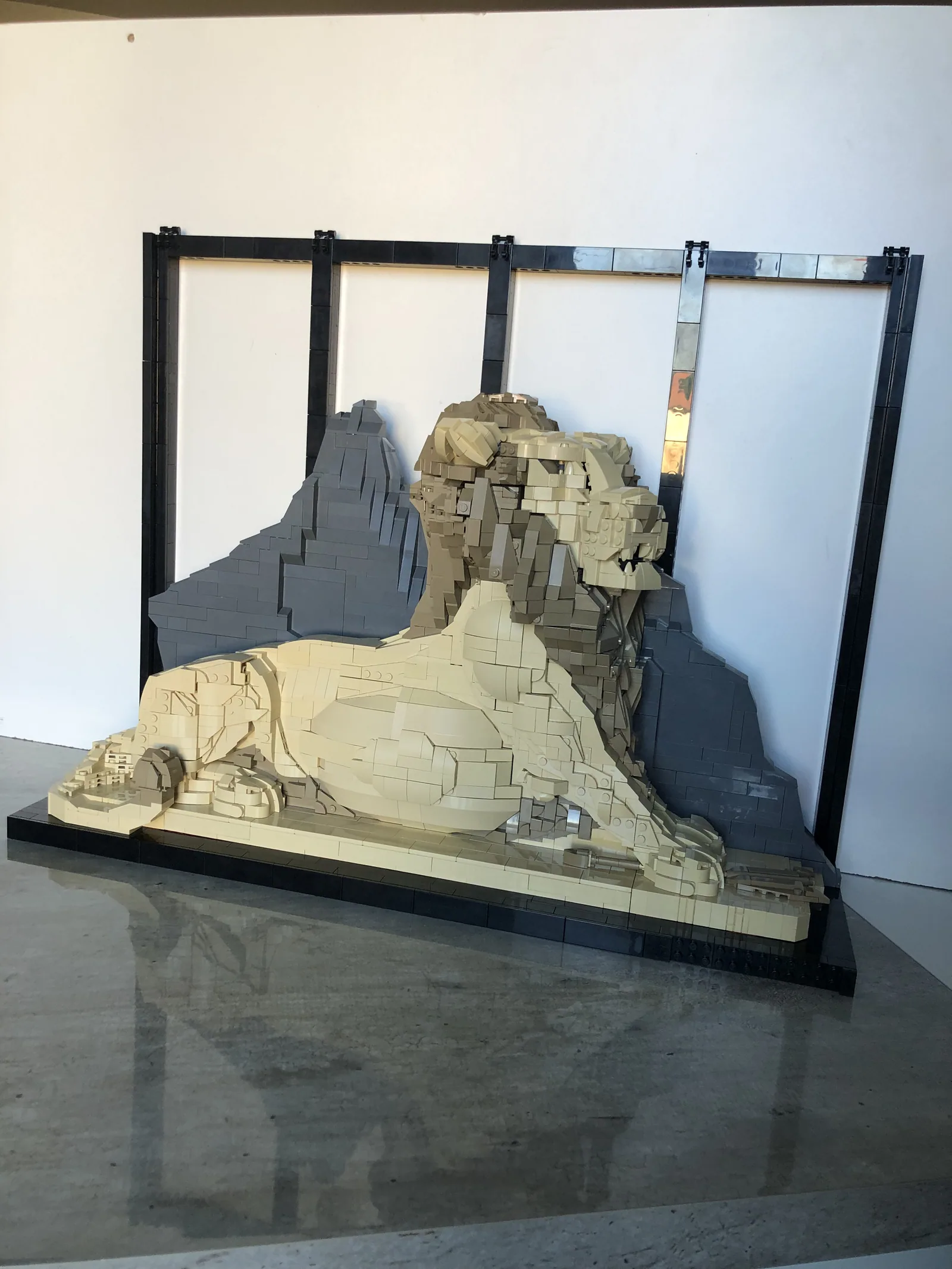
The Lion of Belfort
A city needed a gift that said everything at a glance. It has had one since 1880 — it only had to be rebuilt in bricks.
- Client
- City of Belfort
- Sector
- Local authority
- Place
- Belfort, France
- Date
- 2026
- Purpose
- Official gift to the city's partners
- Pieces
- ⟦Piece count to confirm⟧
- Dimensions
- ⟦Dimensions to confirm⟧
- Built
- In the workshop
An object that says Belfort without explaining itself.
A city hosting partners looks for a gift that resembles it. An engraved pen or a hamper of local produce does the job politely; neither tells a story, and neither stays anywhere.
Belfort has something few towns do: an emblem everyone recognises. Auguste Bartholdi's reclining lion, cut into the pink sandstone at the foot of the citadel since 1880, is to Belfort what few monuments are to their own city — a silhouette that needs no caption.
The brief fitted into one sentence: rebuild that lion in bricks, so it can be given away. It came after Kitribrick, but it is another project altogether — that one had to explain something; this one had to represent it.
A sculpture, not a building.
A building goes into bricks almost naturally: it has right angles, floors, drawings. A sculpture has none of that. The lion is a mass of muscle and mane without a single flat surface, and that is the whole problem of this piece.
The answer lies in the technique: the bricks are almost never laid the right way up. They are turned on their side, inverted, stacked sideways, so that slopes and curved tiles follow the line of the back, the swell of the shoulder, the fall of the mane. Each lock of the mane is its own sub-assembly, angled in its own direction.
The rock face is part of the work, not scenery: Bartholdi's lion is set against the citadel cliff, and separating them would have made it unrecognisable. It is built in grey, set back, deliberately coarser — which leaves all the light to the lion.
The black frame, finally, holds the piece inside a rectangle. It turns the sculpture into something closer to a picture, which settles a practical question: a gift has to stand somewhere and stay put.
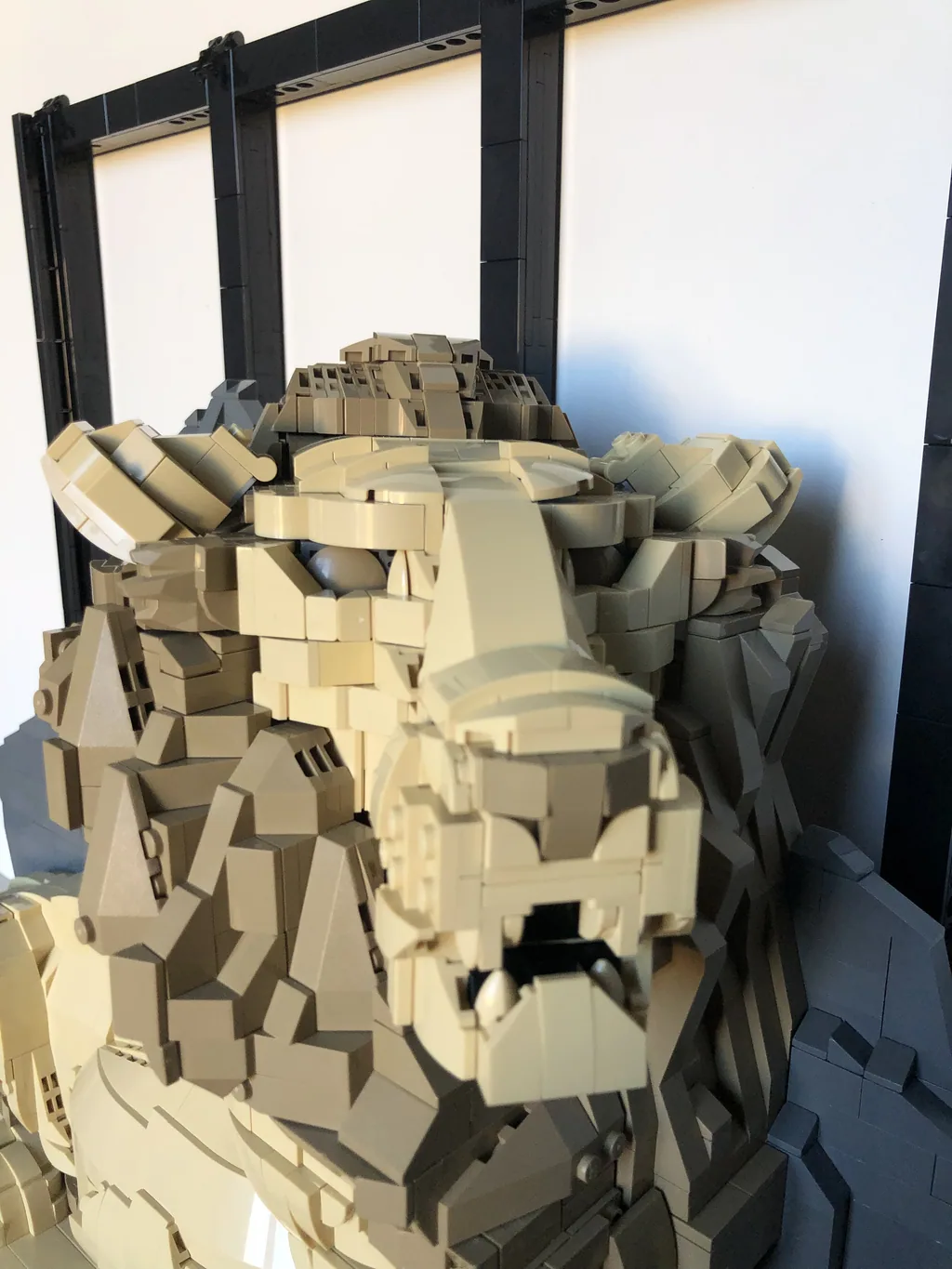
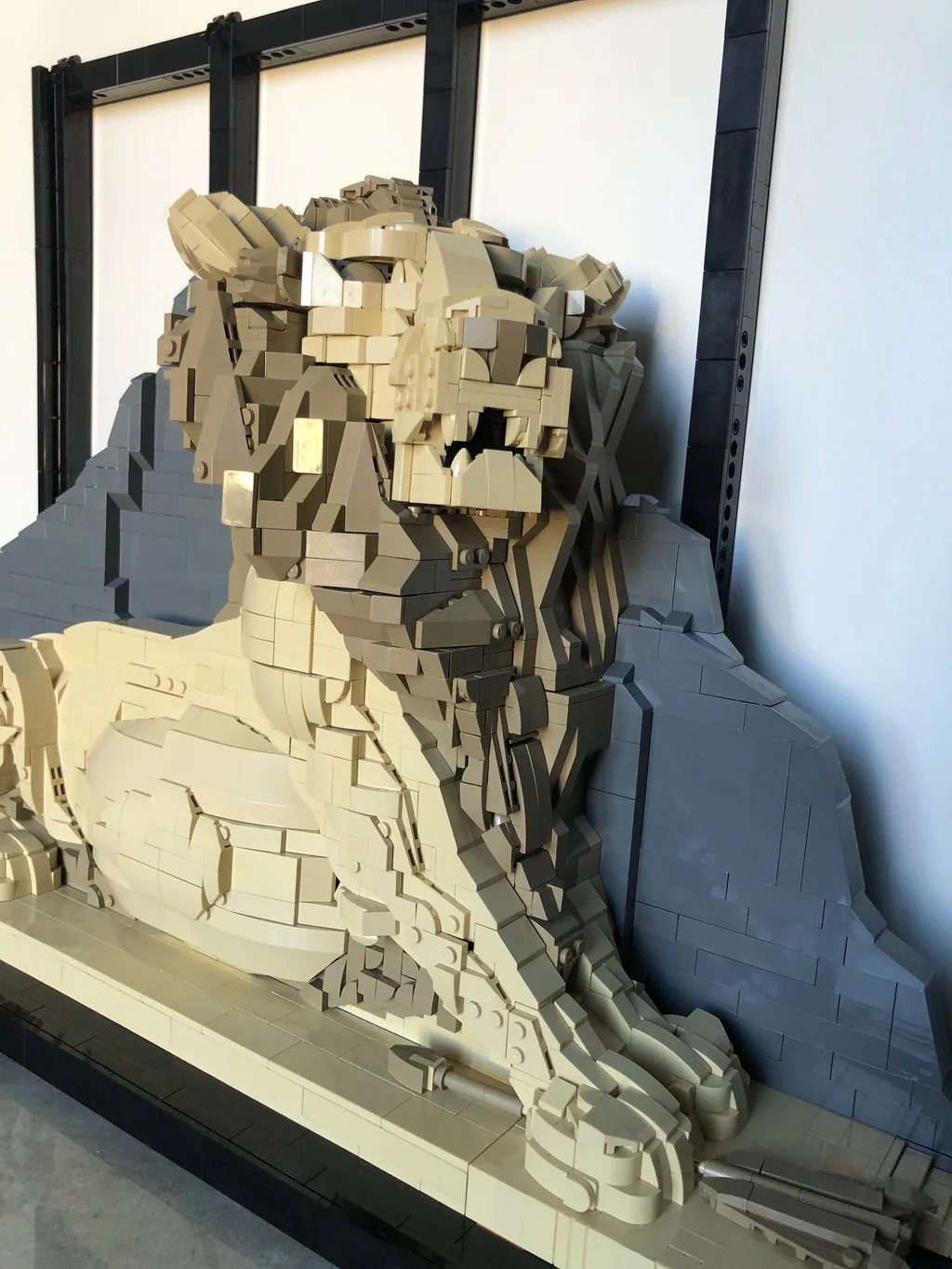
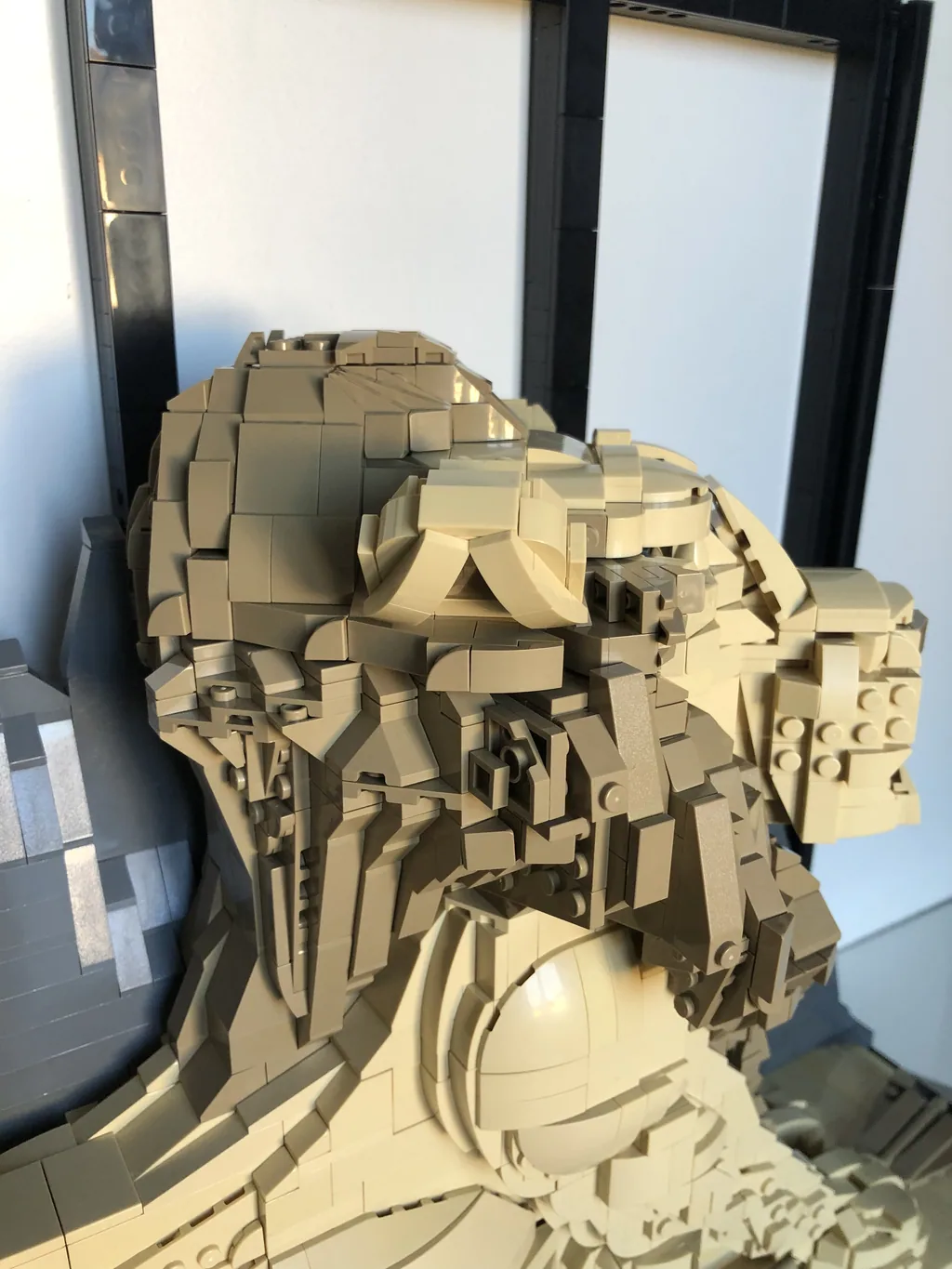
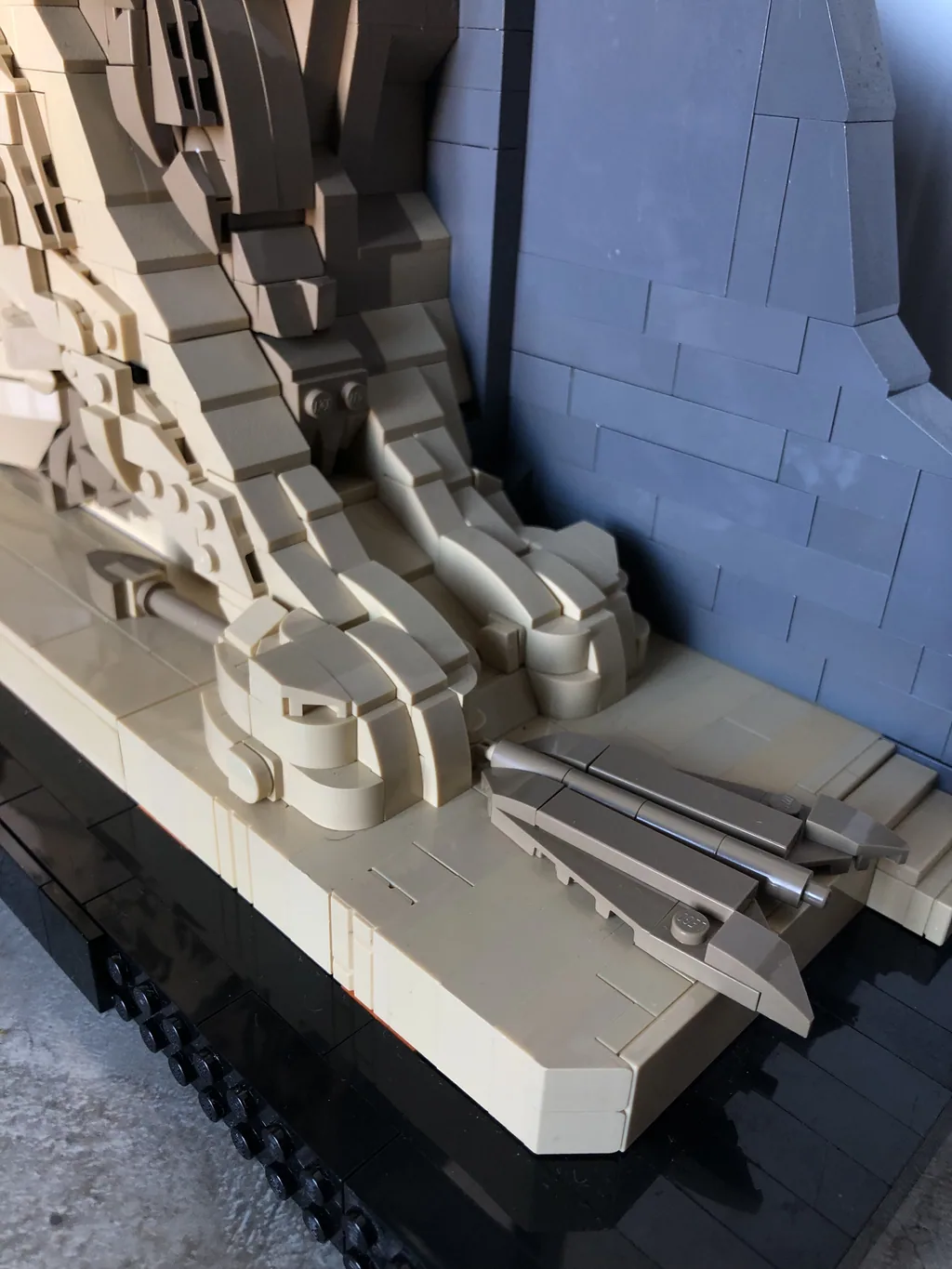
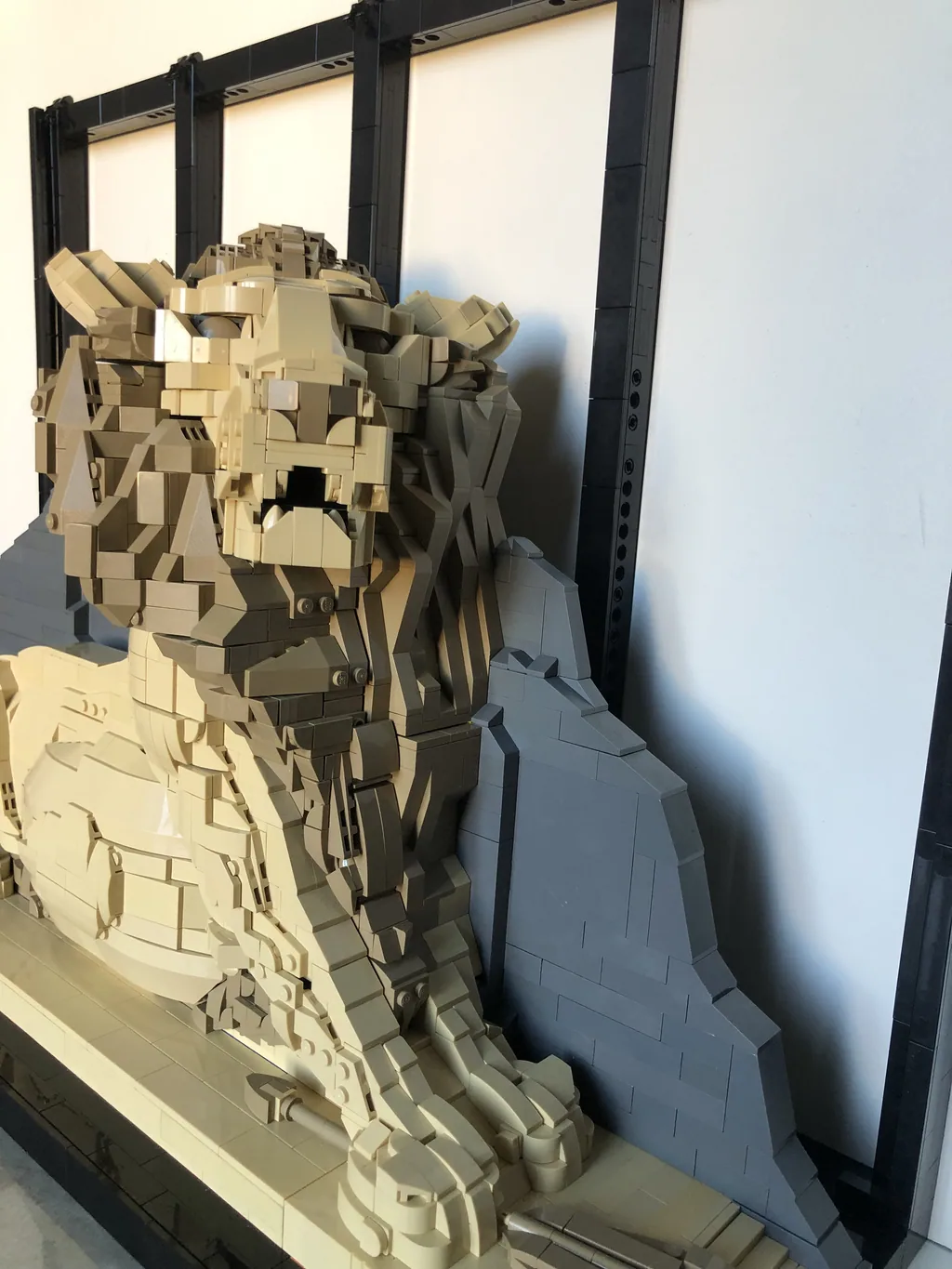
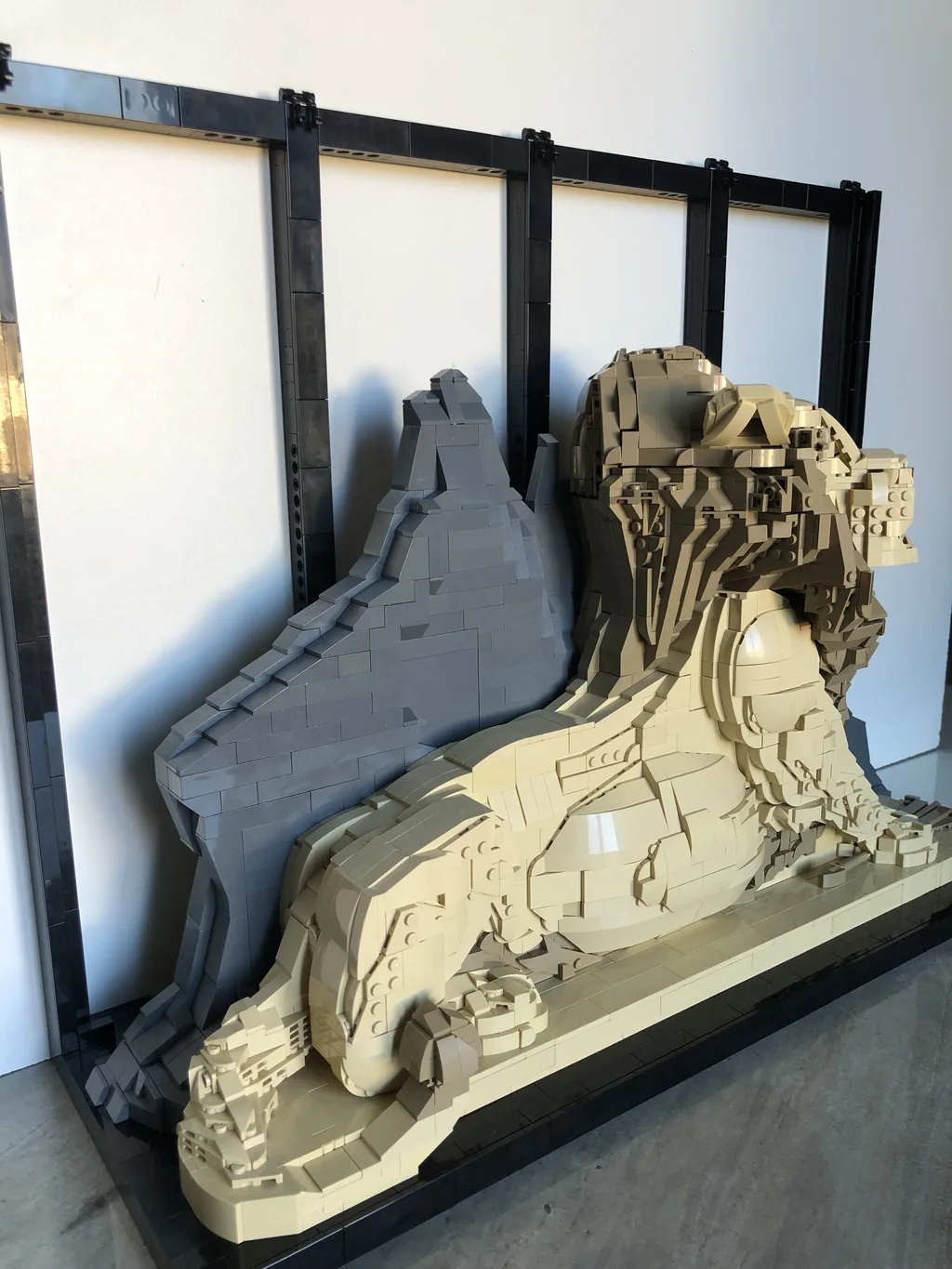
A gift that stays on a desk.
The piece was given by the City of Belfort to its partners. That is what an official gift is asked to do and rarely manages: not end up in a drawer. A recognisable sculpture, left on display, saying where it comes from without anyone having to explain.
You have an emblem.
A monument, a sculpture, a silhouette your region or your brand alone possesses. Describe it in three lines.