Models · Narrative

The diorama

A model shows a building. A diorama shows a moment: figures in the middle of doing something, a season, an action already under way, understood before the label is read.

Start a projectSee a case study

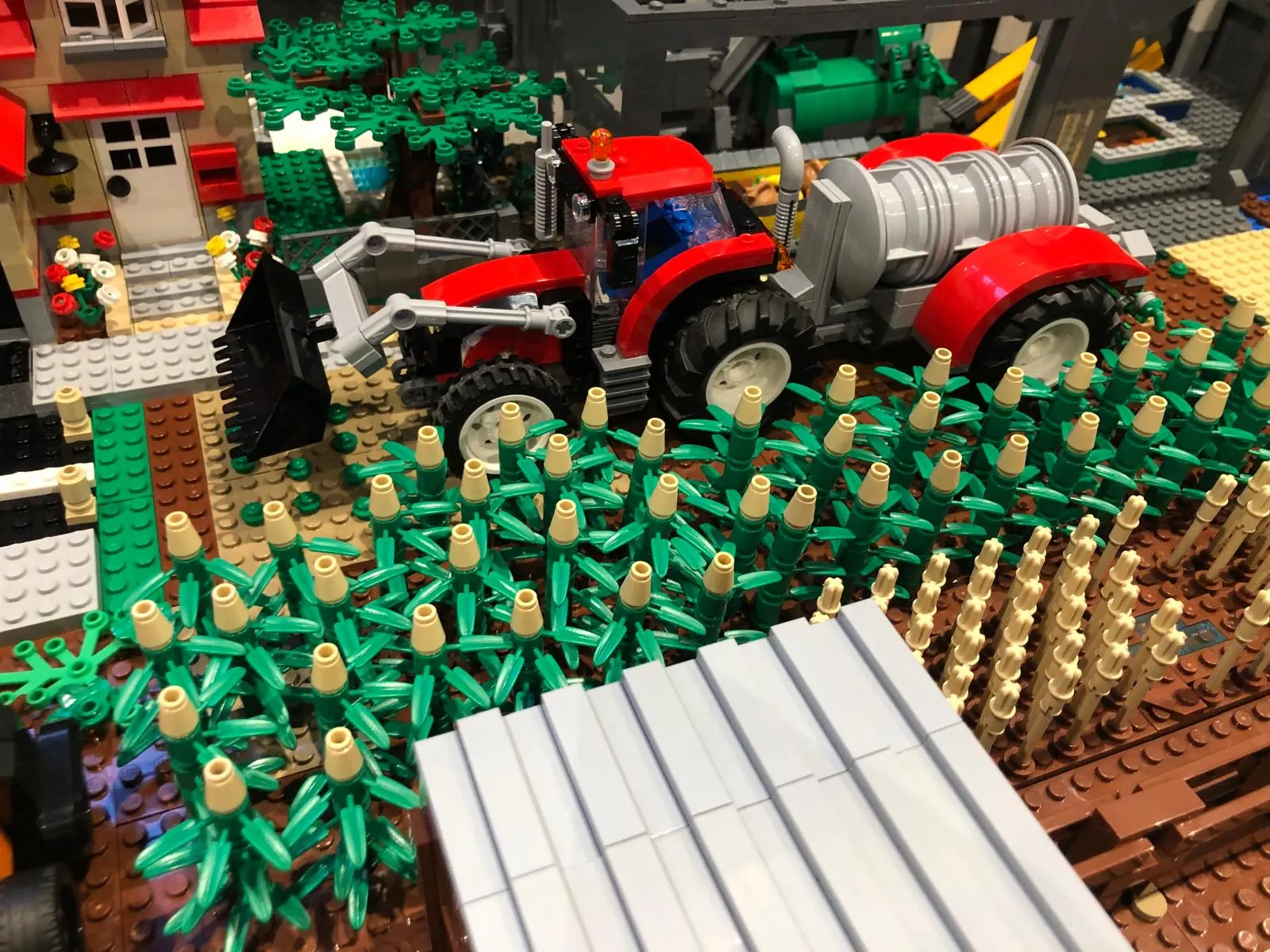
Agricultural brick diorama: harvest, machinery and cultivated fields
Explanatory diorama — a whole industry explained without a line of text.
  • Case or plinthFormat
  • Minifig or microScales
  • 6 to 14 weeksLead time
  • NoneText required
  • On requestDetailed study

What separates a model from a diorama

A model answers what something looks like. A diorama answers what is happening in it. You choose a moment: the harvest rather than the field, the skip being emptied rather than the sorting plant, the courtyard of the staging post at the hour travellers stop there.

Everything else follows from that moment. Where the figures stand, which way the machines face, doors open or shut, the colour of the foliage, the light if the scene goes into a case. Visitors look first for what is under way, then work back to what caused it.

The format lends itself to series. Three processes side by side, two territories, four states of the same place: visitors move from one scene to the next and make the comparison themselves, without reading two paragraphs.

How it works

  1. You describe what has to be understoodAn industry, a process, a trade, an episode. We look with you for the moment that sums it up, the one where the essentials are visible at a glance.
  2. We write the scene before building itWho is there, who is doing what, what comes into frame and what stays out. That is where it is decided, not in the workshop.
  3. You sign off the digital modelVolumes, layout, palette and the placing of the figures are settled on screen before the first piece is laid.
  4. We buildEvery element has its reference: a roof tile, a cobble, an ear of wheat, a conveyor. We hold 118,000 references in stock, sorted piece by piece, and sourcing the rarest sets the lead time.
  5. We set the scenePlinth, case, any lighting, labels if you want them. A piece meant to tour schools or trade shows is designed to come apart, with its bespoke transport case.
  6. You keep the means to look after itFragile elements are designed to be replaceable and a spare-parts kit comes with the scene. On-site assembly is included in the quote for any piece over 2 m².
Plans de pose imprimés posés sur une table de montage
Le plan avant la briqueTout est modélisé en numérique avant la première pièce posée

What a diorama can do

  • Explain an invisible process

    The journey of a piece of waste, the treatment of water, the transformation of a soil. The stages are built side by side, in order, and followed with a finger.

  • Tell an episode

    Ambrussum: the paved Via Domitia and its porticoes, the courtyard of the staging post with its hearth, the stables, the arched bridge. Ten square metres of inhabited scene, metres away from the real remains.

  • Set two situations against each other

    The same industry handled in town and in the countryside, two periods of the same place, two territories: two scenes of matching quality, placed side by side.

  • Let the public build it

    A diorama divides naturally into zones — a courtyard, a field, a street. Each group builds its own, guided by the digital plans, and the whole closes up by the end of the day.

What people ask

What does a diorama cost?

We publish no price list: at the same size, an outline scene and a scene detailed down to the figures do not cost the same. Four things drive the price: scale, level of detail, the number of pieces to produce and the deadline. The feasibility estimate and a broad range are free, in around thirty minutes of conversation. Our rates are provided on request, within 24 to 48 working hours.

How big should it be?

Anything from a board that sits on a table to a set covering several square metres: the Ambrussum scene takes up ten, the data centre model measures 175 × 100 cm. Tell us first where the piece will stand and how it will travel, and the dimensions follow from that.

Do we need labels?

To understand the scene, no. To name things, yes: most of our clients put a short label beside the diorama and let their interpreters do the rest. We supply the plans and the list of elements represented so your team can write them without error.

Can it tour schools or trade shows?

Yes, provided it is planned from the design stage: modular structure, reinforced assembly, bespoke transport case and a spare-parts kit. We train your team in reassembly at the first installation.

Can it be lit?

Yes. Lighting is planned with the plinth or the case and is part of the installation quote. A night scene or a cutaway interior needs lighting to be legible.

How long does it take?

Six to fourteen weeks depending on size and level of detail. The limiting factor is sourcing certain rare pieces, not construction: come to us as soon as the exhibition or show date is set.

Can our visitors build it?

Yes. We design the scene and the laying plans, then your visitors, teams or partners build part of it, guided by our digital plans and supported by our hosts. You choose how much is left open at the design stage.

Let's talk

Describe the scene you want to show.

A process, a trade, a date, a place: that is enough for us to say what can be staged, at what scale and at what cost.

Start a project

contact@unibrick.frAnswered within 24–48 working hours
+33 7 61 71 03 69Monday to Friday, 9am – 6pm CET
Workshop near LyonWe deliver and install across France