07 61 71 03 69
Models · Collective building

The model built by the public

A model can arrive finished, under glass. It can also be built by the very people who will come to see it. We design the piece, break the build into sessions, and your visitors put it together — with no prior knowledge of bricks.

Start a projectSee Ambrussum

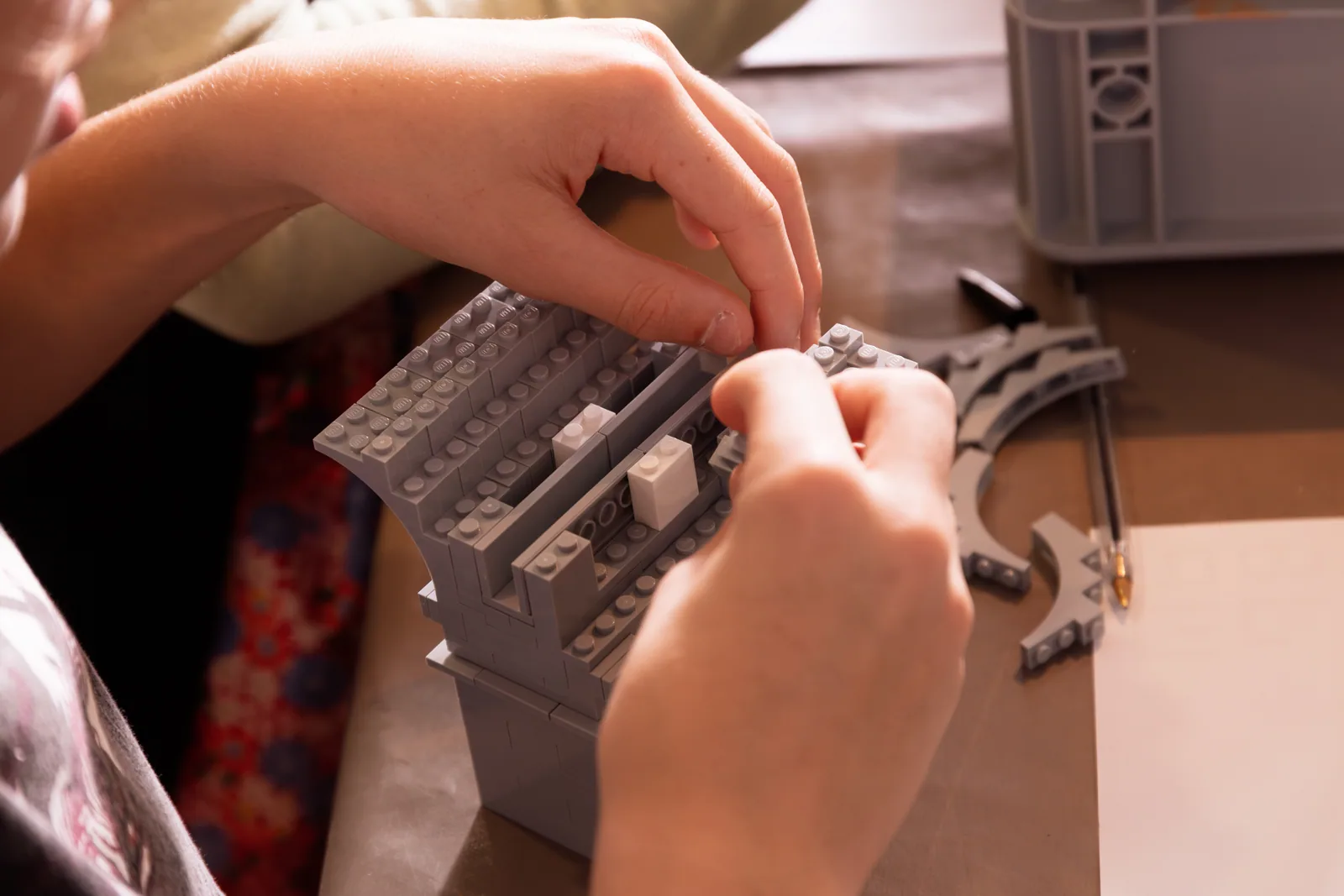
Two pairs of hands building a module of the Ambrussum brick model together
Ambrussum — 400 museum visitors built the way station, beside the real remains.
  • 20 to several hundredParticipants
  • One day or several sessionsFormat
  • From 5, no upper limitAge
  • One facilitator per 40 participantsSupervision
  • Designed and sorted in the workshopPreparation
  • On quotationPrice

Why have it built rather than delivered

A model delivered finished is admired. A model built by the public is talked about. People come back to see it, point out the part they laid, explain it to someone else. For a museum, a local authority or a school, that is the difference between an exhibit and an object a community takes ownership of.

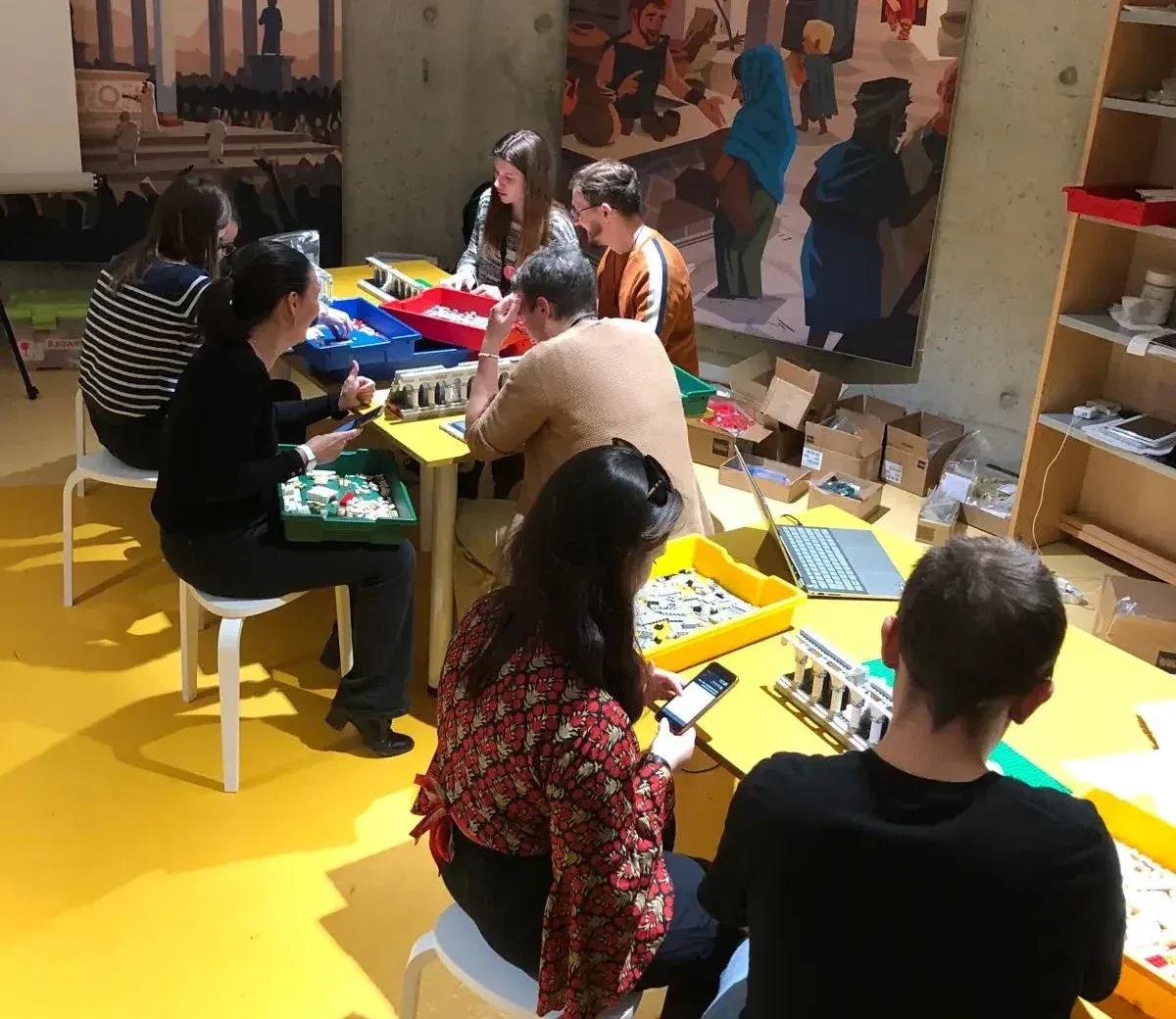
The underlying work does not change: the design, the piece count, the sorting and the laying plans all happen in the workshop, exactly as for a conventional model. What changes is how it is broken up. We divide the build into modules a beginner can complete in twenty minutes, with a readable plan and parts already sorted into their bin.

Nobody needs to know how to build. That is the point everything turns on: if a session demands skill, half the room will not sit down. Our plans are designed so that a five-year-old and their grandfather succeed at the same module.

At Ambrussum, four hundred museum visitors built the Via Domitia way station — 45,000 pieces, 10 m² — later installed beside the real remains. At Montbrison, around a hundred people built a two-metre mosaic in a single festival day. At Sevanova, guests at an opening built the rear facade of the model, each laying a brick engraved with their name.

How a participatory build runs

  1. We define the piece and the publicWhat is to be represented, who will build it, over how long and in what conditions. A festival weekend and a six-week school cycle are not broken up the same way.
  2. We design and sortDesign, piece count, purchasing and sorting all happen in the Sourcieux-les-Mines workshop. Each module leaves with its own bin and laying plan.
  3. We test the breakdownA module that stumps a beginner is redone before the first session. It is the invisible part of the work, and it decides whether the public stays or drifts away.
  4. The public buildsOur facilitators guide, explain, repair and keep things moving. One facilitator per forty participants, up to ten available.
  5. We assemble and installThe modules are brought together, reinforced and set on their base. The piece stays with you — it is yours, and it belongs to those who built it.
Plans de pose imprimés posés sur une table de montage
Le plan avant la briqueTout est modélisé en numérique avant la première pièce posée

Where it works best

  • Museums and heritage sites

    The public rebuilds what it has just visited. At Ambrussum the model was built a few metres from the remains it depicts — the connection makes itself.

  • Towns and civic events

    A neighbourhood, a monument or a planned development built by residents over a weekend. The piece then stays in the town hall or the library.

  • Schools and holiday clubs

    A cycle across several sessions: the model advances each time, and pupils watch something rise that none of them could have built alone.

  • Openings and corporate events

    Guests lay the final section, often with a brick engraved with their name. At Sevanova it was the rear facade of the new offices, built on the night.

What people ask

Do participants need building skills?

No, and that is exactly what we design for. Modules are broken up so a beginner finishes one in about twenty minutes, with a readable plan and parts already sorted. A five-year-old and their grandfather succeed at the same module.

How many people can take part?

From twenty to several hundred. Ambrussum involved four hundred visitors across the build. The number depends mostly on the time you have and the space around the tables, not on the model itself.

What if a section is built wrong?

Our facilitators check as they go and rework what needs it, without telling the person who laid it. A sound structure matters more than a lesson in building.

How long does it take?

From a single day for a participatory mosaic to several weeks for a monumental model. The session breakdown follows your calendar: a festival weekend, a school term, an exhibition season.

Who keeps the model?

You do. It is designed to last: base, reinforcement, and a display case if needed. That is rather the point — people come back to see the part they built.

What does it cost?

Every build is quoted project by project: the size of the piece, the number of sessions and the number of facilitators decide. Our rates are provided on request, as quickly as possible. A feasibility estimate is free.

Can this kind of project be funded?

Often, yes. Participatory projects frequently fall under cultural outreach, arts education or community budgets. Tell us your framework and we will draft the quotation accordingly, with full company registration and compliant invoicing.

Let's talk

Who is going to build it?

Tell us what the piece should represent, who will build it and over what period. Three lines are enough to start.

Request a quote

contact@unibrick.frAnswered as quickly as possible
+33 7 61 71 03 69Monday to Friday, 9am – 6pm CET
Across FranceAcross France. Bases in Lyon, Toulouse and Dijon.