

The collaborative model
One subject, one site plan, and teams that share out the zones. Each group builds its own piece, then the whole thing has to hold together — and the model stays with the school.
- Half a day to several sessionsDuration
- Ages 6 to 11Audience
- One to three classesGroup size
- On requestRate
- A display modelYou keep
Building together starts with dividing the work
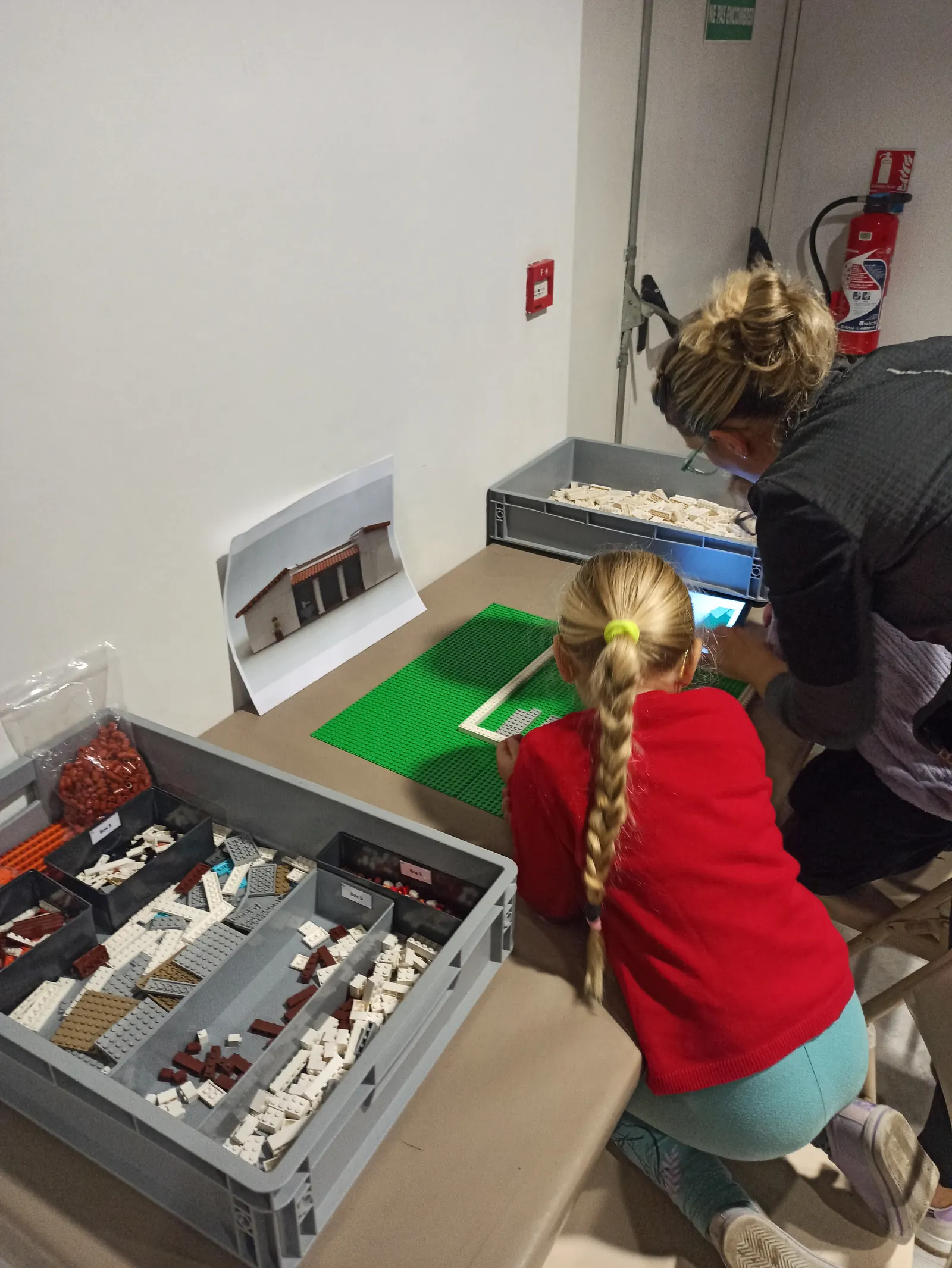
The group is given a subject — a castle, a future city, the streets around the school — and a site plan laid out on the tables. Each team takes a zone: the ramparts, the main square, the harbour, the housing.
The zones meet, and that is where the real work starts. A street has to line up with the neighbouring street, a roof has to stop at the right height, two teams that picked the same colour for two different buildings have to change one. Pupils move from table to table to settle these points.
The host sets the frame at the start — the scale, the site plan, the stock available — then circulates. The remaining decisions are made between the teams.
How it works
- You choose the subjectUsually something already on the syllabus: the Middle Ages, the sustainable city, the neighbourhood around the school. We start from what the class has already covered, not from a catalogue.
- We prepare the plan and the stockWe cut the subject into zones, one per team, and prepare the matching bricks. You get the site plan before the session.
- First session: the frameTeams form, take their zone and discover the shared scale. One host supervises around thirty pupils; beyond that we come as a team. Your own staff stay present as regulations require, without having to run the session.
- Following sessions: the buildEach session picks up where the last one stopped. A cycle is planned with the teacher or the after-school coordinator, across the year or across one term.
- The model stays with youWe pack up our equipment and leave the model. It goes on display in the hall, the library or the classroom.
When this is the right format
A year-long school project
The subject splits into spaced-out sessions: one per term, or one a month. The model grows between visits and gives the project a visible checkpoint.
A class you want cooperating
Nobody finishes their zone alone: the borders between teams force pupils to talk, swap parts and decide.
A syllabus topic made concrete
Scale, symmetry, volume, plans: geometry is handled before it becomes a chapter. The history or geography subject stays in front of the class after we leave.
An exhibition or an open evening
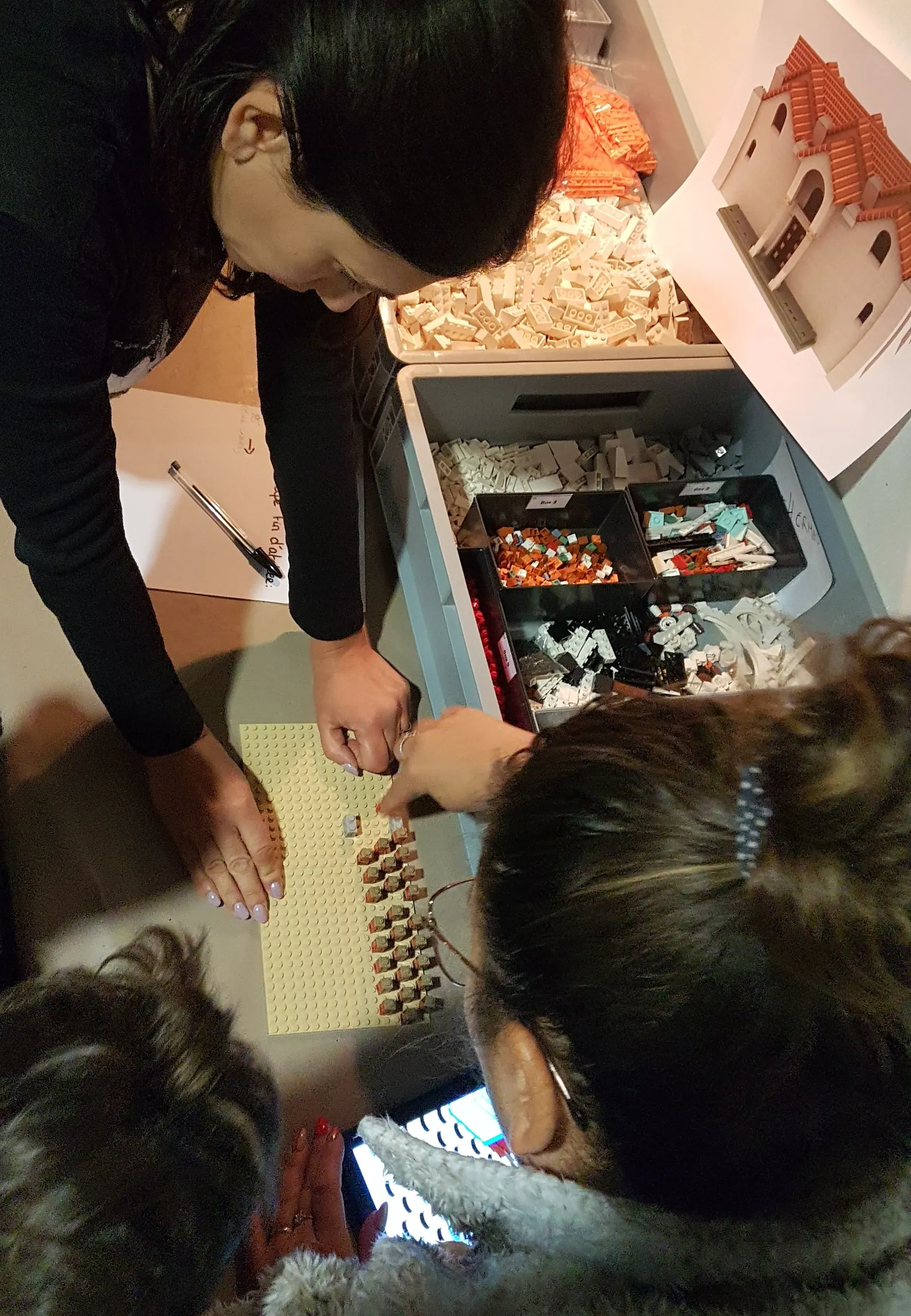
The Ambrussum model, built in part by children during the school holidays, is now on display at the oppidum museum. A class model is shown the same way on an open evening.
What people ask
What does it cost exactly?
Our rates are provided on request, as quickly as possible. A multi-session cycle is priced session by session on the same basis.
Who funds this kind of project?
The school fund, the parents' association, the local council budget or the holiday centre's own budget. We provide a formal quote for your paperwork, with our company registration number and our professional public liability certificate.
How many pupils can work at once?
One host for around thirty pupils on a standard workshop, and more staff beyond that. Our rates are provided on request, as quickly as possible.
Does the teacher have to prepare anything?
No. You provide tables, chairs and a well-lit room; we bring everything else, protective covers included. The subject is agreed with you beforehand, by phone or email.
From what age?
From five, with a simplified subject and a shorter session. The format works best with six to eleven year olds, when pupils can divide the roles themselves.
What happens to the model?
It stays with the school. The bricks from a free-building session leave with us; the ones in a collaborative model do not.
Can we run several sessions across the year?
Yes, and it is the most common shape for this type of project. We regularly run multi-session cycles with teachers and after-school coordinators.
You have a theme and a class.
Tell us the year group, the number of pupils and how many sessions you have in mind: we come back with a site plan and a quote.